The use of hydrogen as a fuel for passenger vehicles in the United States appears to have hit a dead end. Always a niche proposition limited almost exclusively to California, in recent years sales of hydrogen-powered cars have all but evaporated. Making matters worse, an already infinitesimally small network of fueling stations has become smaller still. In short, hydrogen doesn’t seem to have much of a future here.
Cruise across the Pacific, though, and it’s a different story. Hyundai is one of the few automakers that has sold a hydrogen-fuel-cell-powered car in America in the form of the Nexo and remains committed to the propulsion system. But the car itself is only one small part of Hyundai’s overall H2 equation. We recently had a chance to travel to South Korea, where we were able take a road trip in a newly updated 2026 Nexo from Seoul to the southern city of Mokpo, learning about the car and what hydrogen power as a whole means to Hyundai along the way.

Driving the 2026 Nexo
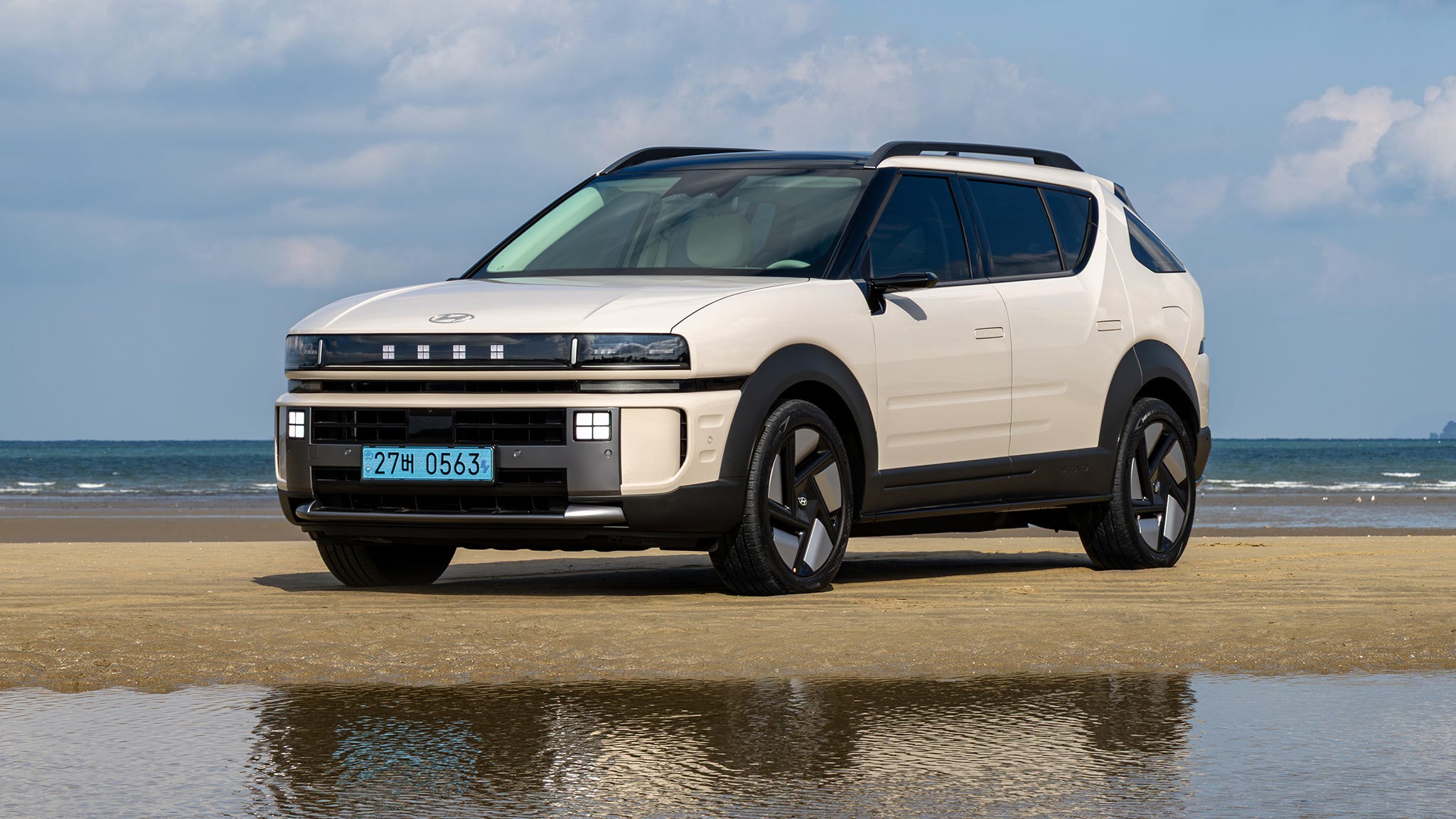
If you think the Nexo looks a bit like a Hyundai-fied Pontiac Aztek, you’re not alone. And if you think it looks strange in photos, know that it’s not one of those cars that makes sense when you see it in the metal—if anything, the Nexo’s funky proportions and skewed body panels make it seem even stranger.
Not surprisingly, Hyundai won’t sell the new Nexo in the United States. That’s fine with us, because it’s a tremendously dull car to drive. Its electric motor (remember, hydrogen combustion is a thing, but the Nexo and its contemporaries use hydrogen oxidation in a fuel cell to generate electricity) produces 254 hp, which draws power from a small 2.64-kWh battery. Hyundai says the Nexo can reach 60 mph in 7.8 seconds, but it feels slower, with a power delivery similar to that of a weak front-drive EV.
Its steering is also slow, as well as light and vague; it takes concentration to aim the Nexo in its intended direction. Meanwhile, the suspension covers ground in a bouncy and reactive manner, traits that contribute to its joyless handling characteristics. There’s simply no verve here. The Nexo drives competently enough, but that isn’t a reason anyone would want it.

Rather, people might want it for the simple fact that it’s hydrogen-powered, and in that context, Hyundai has made improvements from the outgoing Nexo. It’s quicker than the older version, which hit 60 mph in 9.8 seconds, and thanks to fuel cell efficiency gains and a bigger high-pressure hydrogen fuel tank, range increases from approximately 414 miles to about 512 miles on the WLTP cycle (about 20 percent more generous than our EPA ratings on average). Whatever the number, it’s a considerable distance for any vehicle, regardless of fuel source.
Ultimately, the Nexo offers a quiet, uncomplicated driving experience much like that of an EV with the fueling ease of a gas car—provided there’s a hydrogen station nearby, of course. Speaking of, the US has barely 50 stations nationwide at this point, as opposed to some 200 in Korea and almost 300 across Europe.
The Nexo’s cabin isn’t a bad place to be, either, showing Hyundai’s usefully human-centric design approach that combines handy storage spaces with stylish forms. Materials feel premium and features abound, including digital side-view mirrors, dual wireless charging pads, a 360-degree camera, and Hyundai’s first Bang & Olufsen audio system. There are heated and ventilated seats in the front and rear, but the underfloor hydrogen tanks cause a significant elevation of the back-seat hip-point, compromising headroom.

More Than Cars
Don’t dismiss hydrogen as unviable for cars just because the Nexo is mundane—recall that the deeply rad N Vision 74 sports car concept is powered by the stuff. There’s a half-decent chance Hyundai is working on putting that wedge-shaped rocket into production, along with other hydrogen fuel cell EVs. It’s all part of the automaker’s plan to develop vehicles that use various fuel types, including pure electricity and combustion-based hybrids.
But Hyundai’s grand hydrogen plans extend beyond cars. As part of its evolving strategy, it created HTWO (a spelled-out version of hydrogen’s element symbol H2). This sub-business is dedicated to expanding hydrogen applications across industries and modalities. HTWO Hyundai’s stated goal is “achieving a hydrogen society,” an extraordinarily lofty ambition to be sure, but one that underscores the company’s commitment to reducing harmful emissions.