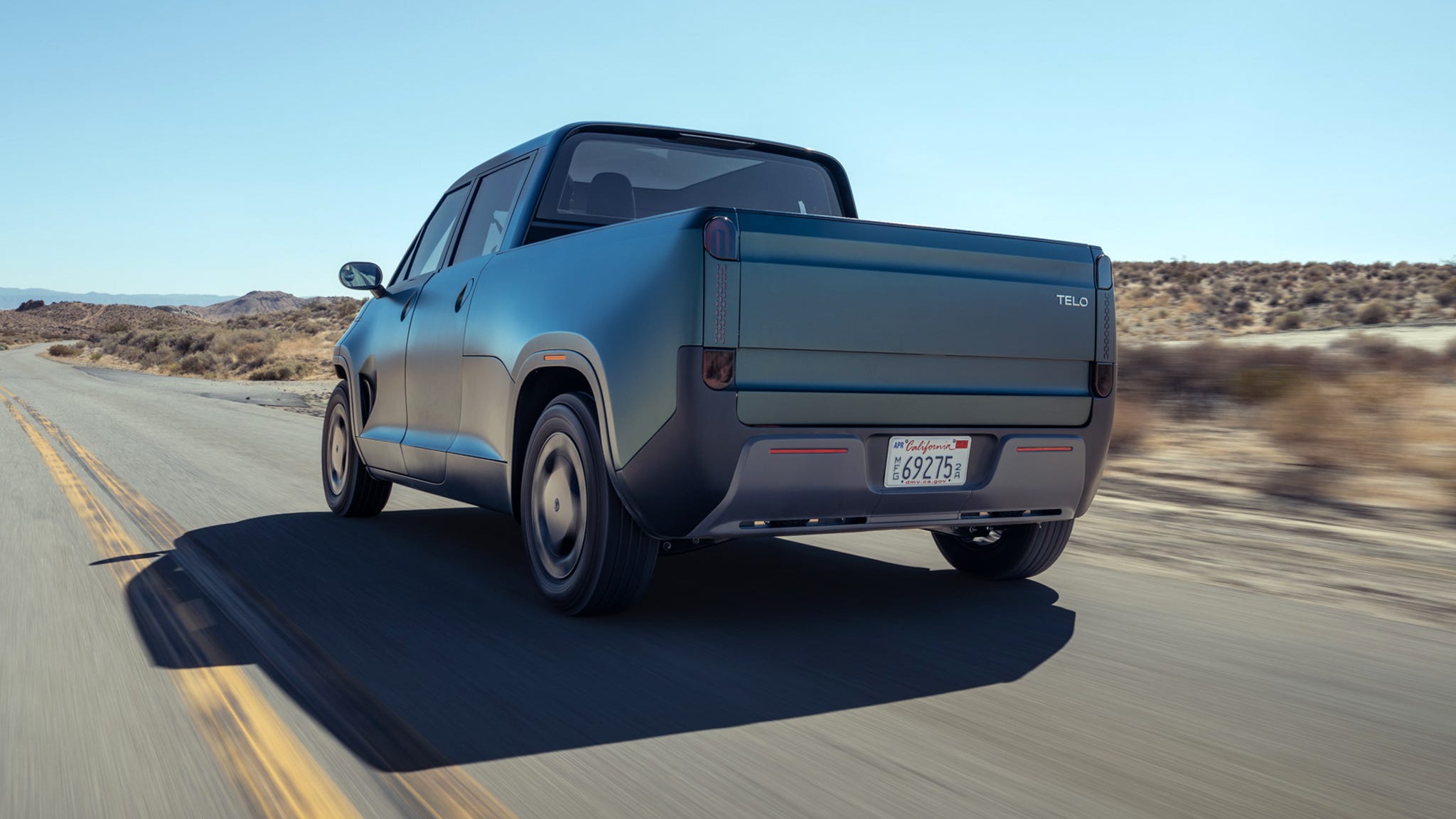
Building cars costs big money—apparently, no one told Telo. Before recently securing $20 million in Series A funding, the startup had already built two prototypes of its all-electric minitruck, the MT1. With these new resources, it can continue work on getting the MT1 into production.
Earlier this year Telo revealed its first MT1 prototype, painted an eye-catching vermillion, and company CEO Jason Marks took us for a ride. Now there’s a second prototype, coated in a woodsy matte green—and this time, we got to drive. Although far from production spec, it’s a solid foundation for improvements Telo knows it needs. Here’s what we think Telo should focus on as it gears up to start building the MT1 by the end of 2026.
Adjustments and Ergonomics
The MT1 is small but not too small. And you can trust me, as I stand 6 feet, 10 inches tall and found a reasonable seating position. Sure, more space would be nice, but there’s a good amount of it considering how tiny the truck is.
Revisiting ergonomics could make it feel even roomier. The steering column should tilt and telescope more so that the wheel can land at a natural reach. It feels quite low now, as did the screens’ positioning on the dashboard, making it all seem far away. Rear passengers won’t have much space in the best of scenarios, so give the front seats more travel to increase legroom.

Optional Third Row
Packaging—that art and science of fitting all the pieces of a car together—is vital to Telo’s approach. It’s how the automaker can make a truck that’s as long as a two-door Mini have a bed the size of a Toyota Tacoma’s. That it also has a five-seat cab indicates great space efficiency, but Telo says it’s going to offer an optional third-row seat. It’ll supposedly bracket into the bed beneath a cap, as the rear window removes and bulkhead folds down (similar to some other EV trucks).
In our opinion, this is one of those things where just because it can happen doesn’t mean it should. Fitting seven or eight passengers in such a tiny vehicle highlights Telo’s packaging expertise, and could be somewhat amusing for a quick ride. But it’ll never be a viable alternative for true three-row SUVs that are designed that way from the start, instead seeming like a distracting exercise in cramming maximum people into minimal space. Telo has higher priorities than this novelty; it should be scrapped, for now at least. Keep the under-bed storage tunnel, though.

Interior Materials
If Slate is a small analogue of the hardworking Ford F-150, then the MT1 might be thought of as a miniature Rivian R1T. Rather than go stripped-out and function-first, Telo intends the MT1 to be a lifestyle truck, built for design, performance, and adventures.
Accordingly, its interior looks premium, swathed in patterned fabric and decorated with bits of cork and aluminum. Overall, the space is attractive and comfortable. Prototype two’s light blue interior complemented its green paint nicely.
But Telo also wants to serve drivers who will put the MT1 to work: small business owners, contractors, and municipal fleets. For them, such posh materials won’t last. That fabric seems soft, snag-prone, and absorbent—fine for a T-shirt, not a truck. The MT1 must prioritize withstanding automotive duty cycles before worrying about looking good.
Alternatively, Telo could offer a work-focused trim clad in rough-looking but tough-wearing materials, also potentially easing the MT1’s approximately $41,000 starting price.

Buttons
Telo, this one’s serious: The MT1 needs real buttons. Find us a vehicle that’s improved by eliminating physical controls and putting everything in the touchscreen. We’ve never seen one. Rather, our reviews consistently pan the engineered annoyance that comes from this approach. Expect that criticism in yours if you take the MT1’s buttonless layout into production.
Whether your reasoning is based on aesthetics or cost, it’s an avoidable mistake. Look around—after too much time taking buttons away, savvy automakers are hearing customer feedback and returning them to their rightful place on the dashboard. We’re not asking for much, just a few for basics like media, climate control, driver aids, and the glove box. If all else fails, at least your infotainment already seems reasonably user-friendly and responsive.