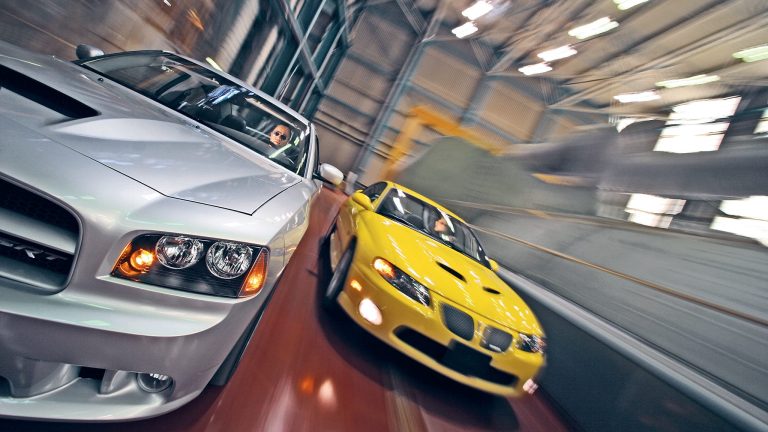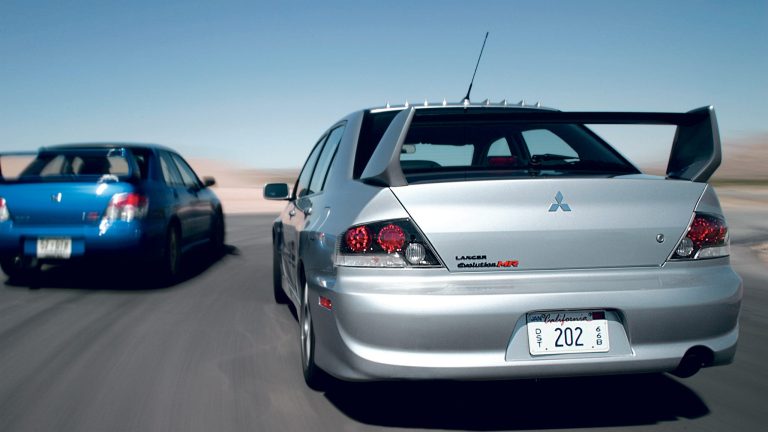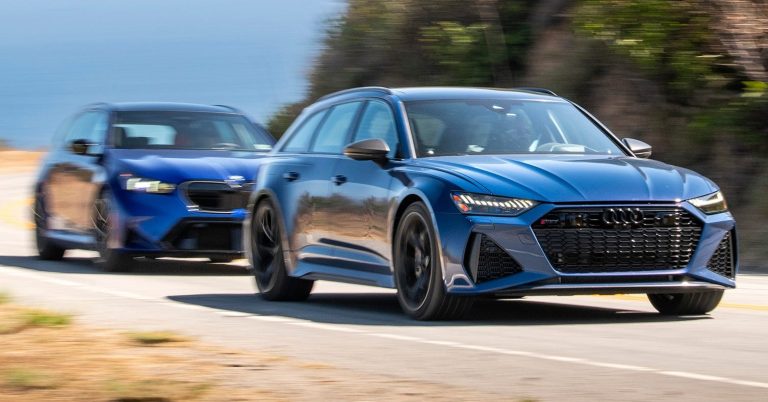
[Editor’s Note: This story first appeared in the December 2005 issue of MotorTrend] America is going through a tough patch. Our forces are taking relentless flak in Iraq, and the best place in the country for jazz music has been flattened by a bitch of a storm. Our beloved auto industry also is in big trouble. Too few Big-Three models have the sizzle to sell well without epic discounts, and high gas prices paint a bleak future for the jumbo guzzler pickups and SUVs about to make their debuts. As a result, GM and Ford now enjoy junk-bond investment status, while DaimlerChrysler clings to the next rung up the debt-rating ladder. Layoffs have been announced, bankruptcies rumored. Isn’t there any good news out there?
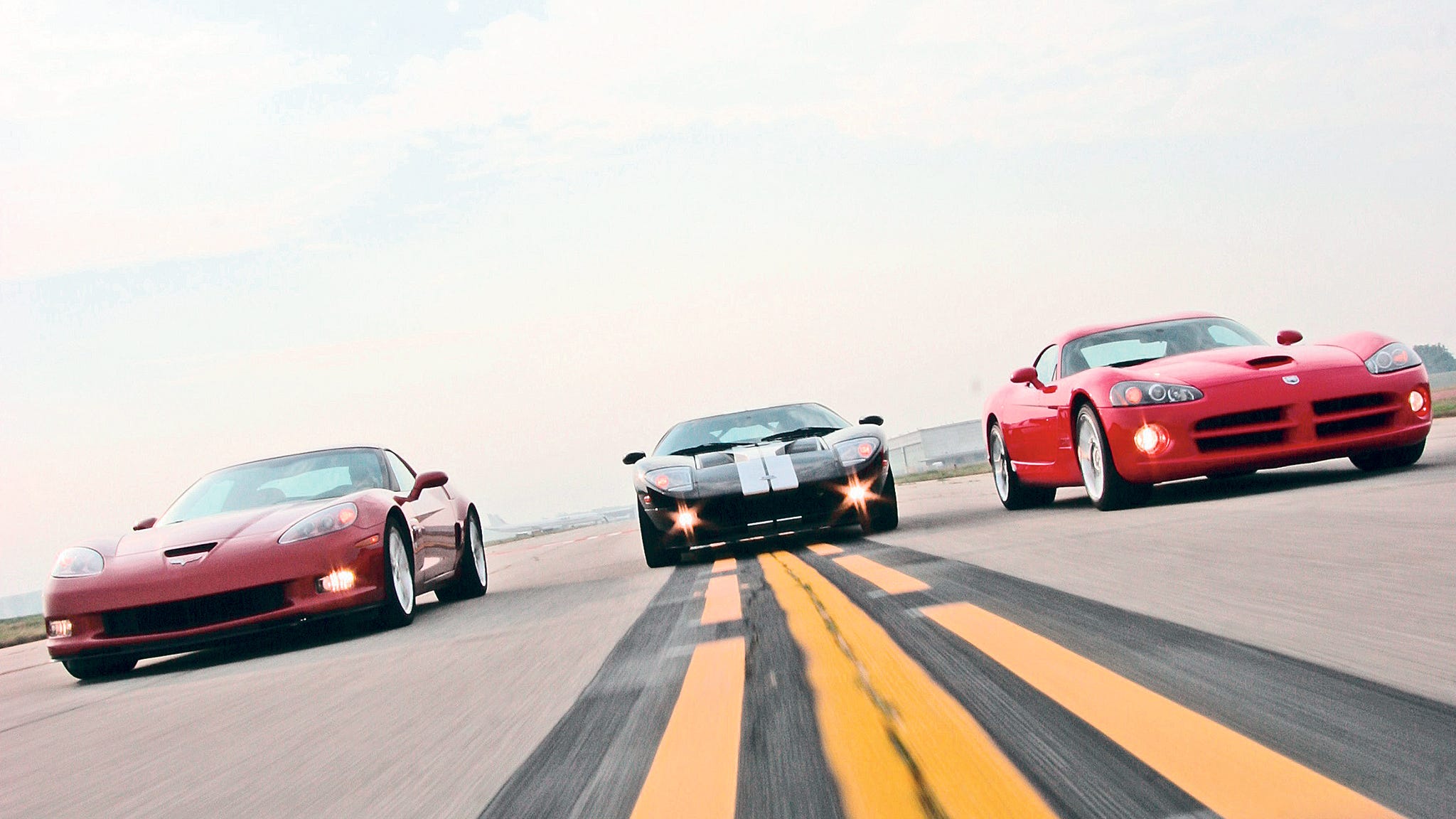
Why, yes! Look up at yon hilltop, where the morning’s first rays of sunshine are backlighting three American supercars, poised to perform heroic acts of derring-do, providing just the sort of ego-boosting, pride-swelling distraction our weary nation could use right about now.
The Chevy Corvette Z06 manages to generate 505 ultraconservative horsepower (see “Dyno Might” sidebar) from a pushrod two-valve small-block V-8 with no high-falutin’ blowers and no fancy variable-valve gimcrackery. It weighs 100 pounds less than its next-best-performing Z51 sibling, thanks to extensive use of exotic materials (the structure underlying the carbon fiber and fiberglass skin is all aluminum and magnesium). No foreigner can touch this Vette’s 6.3-pound/horsepower rating for under $100 grand. The Z06’s price premium over the Z51 is under $20,000–half the surcharge commanded by Chevy’s first exotic, the Corvette ZR-1 (in today’s dollars). And the Z06 earns bonus points for delivering exoticar performance in a Clark Kent wrapper with the visibility and useful trunk space of a daily-driver–and without incurring a gas-guzzler tax.

Dodge transformed a torquaholic V-10 truck engine into a light, 510-horse aluminum race-car mill that’s earned the Viper a long resume of motorsport credits and successfully challenged the Corvette’s decades-old status as “America’s Sports Car.” Its 535-pound-foot torque rating easily out-twists any foreign production car with a five-digit price tag. Its cartoonish schoolboy study-hall styling still looks as powerful, confident, and outrageous as anything ever built in Sant’Agata, Italy. And the fact that this outrageous shape doesn’t take to the skies like Superman at 180-plus mph is truly a miracle of aerodynamic engineering.

Ford’s GT has rekindled Hank the Deuce’s Ferrari feud, taking on the F430 with arguably similar results, though the wins and losses are harder to score this time around because this GT only does battle on public roads, not in international endurance races. That Ford managed to rework the original GT40’s pre-wind-tunnel styling to produce significant aerodynamic downforce and enlarge it for comfort without compromising the proportions of that original American icon is astonishing. That such a windmill-tilting 550-horse fantasy car ever found its way down a production line at Ford is yet another marvel. But most miraculous of all is the fact that this Ford is still, in its third model year, finding buyers willing to pay almost double its enormous sticker price.

“Hold the phone!” you sticklers for automotive parity protest. “The Chevy and Dodge start at $65,800 and $86,995, while the Ford’s base price equals the sum of those two plus $550. No fair!” Well, lower your voices and listen carefully: Our secret mission here is to first determine a conclusive winner in the long-promised Chevy/Dodge face-off and then press on to determine–informed by the full weight of hard scientific evidence and soft hormonal excretions–whether the GT is indeed twice as fabulous as the winner. It won’t be easy–but a battered nation is counting on us, so let’s take to the wild blue yonder and give ’em hell.
Our first theater of operations is the DaimlerChrysler Proving Ground near Chelsea, Michigan, and our opening sortie involves a three-hour strafing run on a deserted 1.6-mile concrete straight. These torque-monsters are all tricky to launch hard. Without deft footwork, each will easily stand in the starting box smoking its rear tires right down to the air inside them. The Viper proved least difficult. Dial up just enough revs to break traction (just under 2000 or so), then feed in the power as the gigantic Michelin Pilots hook up. From then on, it’s foot-to-floorboard in between shifts. Tester Chirico found the Viper’s shifter easier to hustle than the Corvette’s (they share internal gearsets), thanks to its roomier gates. Get it all just right, and she’ll lay down a 4.0-second blast to 60 mph, en route to a 12.0-second, 121.9-mph quarter-mile run. That’s better than last month’s car ran, but still a tick or two off the pace of our quickest Viper roadster.
The Z06 is a different animal. Its traction and stability-control systems work wonders in dynamic handling situations, but not on the dragstrip. Coincidently, each car delivers about 1600 pounds of force to the contact patches at 2000 revs (based on the gearing, tire sizes, and rear-wheel dyno horsepower data). Since the Corvette has the least amount of weight pressing down on those tires, the driver’s ankle must roll onto the throttle with extreme care as the tires begin to hook up, or they’ll still be slipping at the top of first gear. The Corvette compensates for its 12-percent-rated torque deficiency relative to the Viper with overall gearing that’s 15 percent shorter, but by spinning the engine to just a hair beyond the 7000-rpm redline, the Corvette can carry first gear through 60 mph, eliminating the 0.2-second a shift requires. The Viper hits its 6000-rev redline at 58 mph.