Think cars have gotten too expensive? Nissan does, too. The automaker is proud of the fact it has five vehicles in its lineup that start at well under $30,000, and its newest might be the most compelling on the lot. Priced at $23,645 to start and $29,235 when fully loaded, the cheaper-than-before 2026 Nissan Sentra offers tremendous value and style. So what’s the catch? We spent a day behind the wheel of the new Sentra in and around Phoenix, Arizona, looking for one.
What’s New?
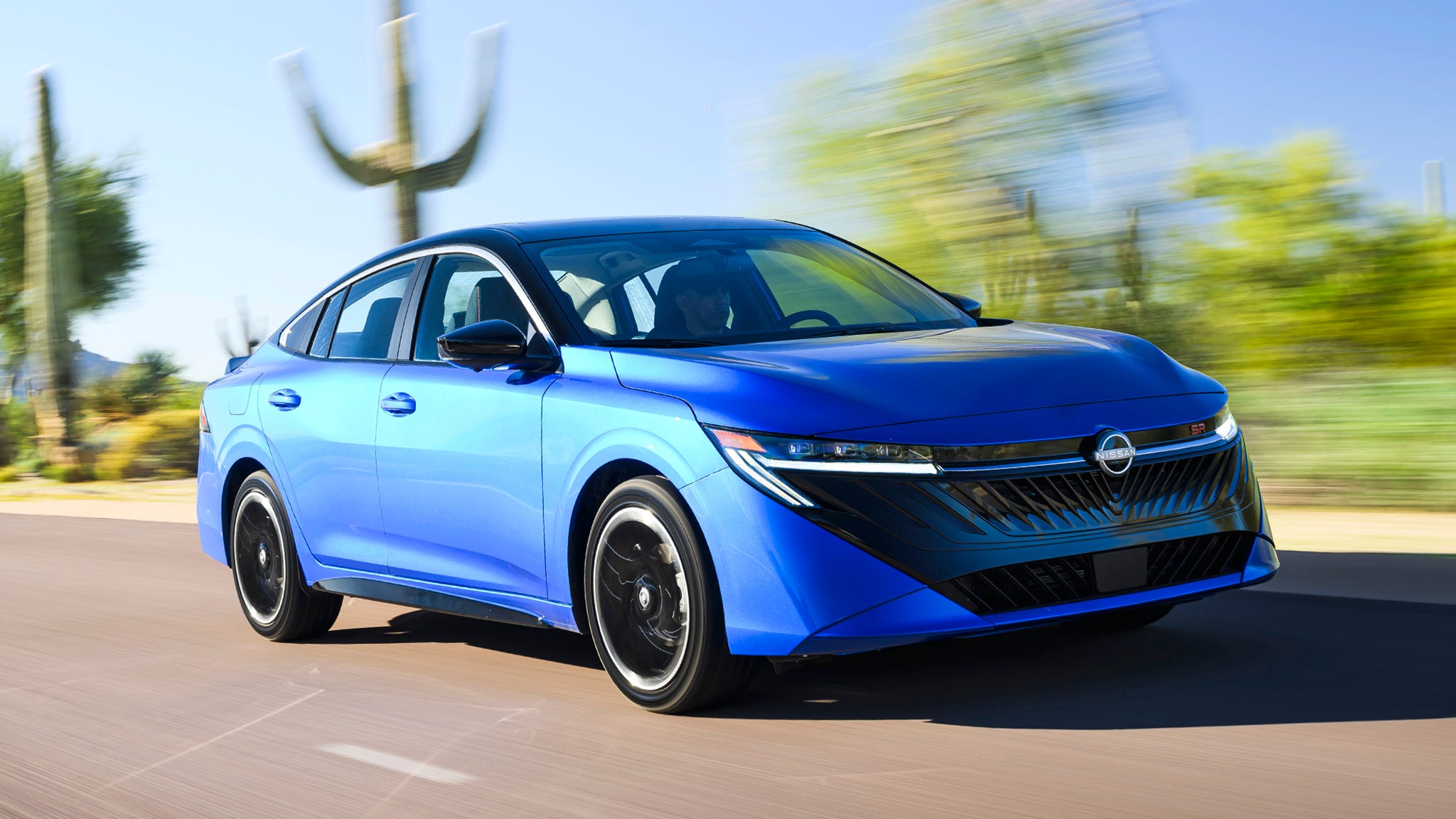
In the era of shrinkflation, it’s rare for a product to get an update and get cheaper in the process, but the 2026 Sentra manages to do that by keeping its updates targeted to what Nissan thinks really matters most to its customers: style and technology. The sleek new fastback roofline and various front fascias make the new Sentra look longer, leaner, and wider than the outgoing model even though it shares the old car’s length and wheelbase.

A platform, too, actually. Most everything under the skin—save for some stampings and added sound deadening materials—has been carried over from the old Sentra with little more than tuning changes to the suspension and steering rack.
Power is sent to the front wheels by a naturally aspirated 2.0-liter I-4 making 149 hp and 146 lb-ft of torque, mated to a CVT retuned for smoother response and more natural feel, meaning it shouldn’t “rubber-band” under acceleration and should behave more like a conventional automatic.
Fuel economy figures vary depending on whether you get a Sentra S or SV, which ride on 16-inch wheels, or an SL with 17-inch wheels, or an SR with 18s. Federal results are pending, but Nissan estimates the S and SV will achieve 30/38/33 mpg city/highway/combined and the SL and SR will return 29/36/32 mpg. Either way, those are slight decreases versus 2025, with most older Sentras posting 30/40/34-mpg EPA figures.

Nissan says it didn’t develop a hybrid to compete with vehicles like the Civic Hybrid or Corolla Hybrid because it didn’t think it could hit its target starting price when including the development of an entirely new powertrain.
While there’s no hybrid, the Sentra’s cabin has a long list of standard equipment bound to make Honda or Toyota buyers jealous. This includes a 12.3-inch infotainment display on all trims, a 12.3-inch digital instrument cluster on most trims (the S gets a 7.0-inch display instead), a more upscale interior design, Apple CarPlay and Android Auto (wireless on SV and up), radar cruise control, and 360-degree cameras.

Behind the Wheel
The new Sentra, especially the sporty-looking $26,245 SR version we drove, cuts a striking presence in person. It looks bigger and wider than it is, with the swept roofline and ducktail spoiler helping make the Sentra also appear sportier than it is.
That’s probably for the best, as Nissan’s goal for the new Sentra was to bridge a wide spectrum of multigenerational buyers looking for an affordable, practical car. Our experience reveals Nissan nailed its mandate, offering the type of performance certain to appeal to those who drive by necessity, not choice.